
The Fall Feasts are almost here. These are the last three of the seven Appointed Times that Yahuah says we are to keep forever as set-apart gatherings.
“The appointed times of Yahuah, which you are to proclaim as set-apart gatherings. My appointed times are these:” – Leviticus 23:2
These last three feasts of the calendar year include Yom Teru’ah (Feast of Trumpets), Yom haKippurim (Day of Atonement), and Sukkot (Feast of Tabernacles). You can read about them in Leviticus 23:23-44. The Father calls these “laws forever in our generations.”
You can think of the feasts as parties thrown by the Creator of the Universe! They are His Appointed Times and we are invited to attend. In fact, we are commanded to attend.
“The reign of the heavens is like a man, a sovereign, who made a wedding feast for his son,” – Matthew 22:2
Unfortunately, many of those invited did not attend. The Father holds seven special events a year, as well as a weekly Sabbath. And guess what? Most of us are ignorant of them or think we have better things to do. We all received the invitation, but we make excuses not to attend. “Oh, those are for the Jews,” or “We celebrate Christmas and Easter now,” or “Those are done away with.” What does Yahuah think about that? We find out in Matthew 22:7-8 that “He is wroth” with those not in attendance, and that those people are “not worthy.”
Yom Teru’ah (Feast of Trumpets)
The first Appointed Time on the horizon is the Feast of Trumpets! We are given signs and seasons to know the timing of this day. Yahuah tells us this in the front of the Book:
“And Elohim said, “Let lights come to be in the firmament of the heavens to separate the day from the night, and let them be for SIGNS and APPOINTED TIMES, and for days and years.” – Genesis 1:14
The Hebrew word for appointed times is “MOED.” And it is used here in Genesis 1:14 to signify why we have lights in the heavens. (Strongs 4150). The first two definitions of the word, “Moed” are:
- an appointment, (a fixed time or season)
- a festival
So on the first page of our Scriptures, Yahuah tells us to use the lights in the sky to determine our appointments (festivals) that He claims are His (Genesis 1:14 and Leviticus 23:2). The Feast of Trumpets occurs in late summer/early fall on the first of the seventh month. The new moon dictates the start to this appointed time. And here are some things to know about it:
- It is considered a Sabbath (High Holy Day)
- In the Hebrew, it is called “Yom Teru’ah”
- It means a “Day of Shouting” or “Day of Shofar Blasts”
- It is filled with joy and praise
- It is believed to be when Yahusha (Jesus) the Messiah will return
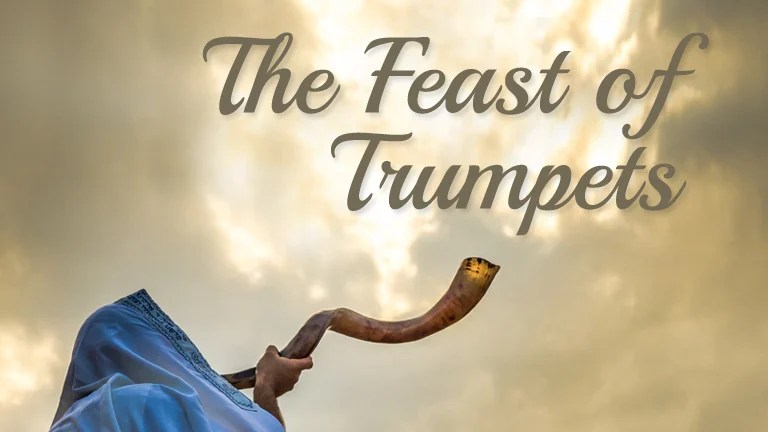
We see the marriage covenant through the Feast of Trumpets. The day is also called Kiddushin (The Marriage of the Lamb). This feast is often seen as a marriage ceremony, with marriage phrases within it. Yahusha is expected to return on this Feast. The idiom, “No one knows the day or the hour” is commonly thought to refer to the Feast of Trumpets. And we should be the bride waiting with oil in our lamps for His return.
So how do we celebrate it? Take the day off. Rest. Gather with others, blow the shofar (or sing and shout praises of joy if you don’t have one). Enjoy a meal with your gathering to discuss the return of our King! Think about the amazing events that happened at the blowing of the shofar. Shofars are mentioned over 80 times in the Scriptures, including the following:
- The Torah was given at the sound of the shofar (Exodus 19:19)
- To announce the beginning of the feasts (Numbers 10:10)
- As a signal for the call to repentance (Isaiah 58:1)
- To coronate kings (1 Kings 1:34)
- At the resurrection of the dead the shofar will sound (1 Thessalonians 4:16)
- In joyful celebration before Yahuah (Psalm 98:6)
The word, “Teru’ah,” is a call to action (Strongs 8643). There are many meanings attached to it, like alarm, blowing of the trumpets, joy, jubilee, loud noise, rejoicing, and shouting.
Today, we have that call to action. Return to the instructions of the Most High. He has invited us to His Appointed Times (the Feasts). His invitation was not just for one people group, but for all those who claim to know Him! Yahusha kept these. So did Paul. And so did every other writer of the Scriptures. He put this Appointed Time in His calendar so that we will remember that Yahusha is coming back soon to reclaim His bride.
Have you been a faithful bride? Are you patiently waiting with oil in your lamps? Are you obedient to the Father’s command to worship in the way He requires? The Appointed Times (Feasts) are beautiful reminders of the Yahuah’s love for us!
“For the command is a lamp, and the Torah a light…” – Proverbs 6:23
 FAITH IN MOTION