
“…Instead, as the One who called you is QADOSH, so you also should become QADOSH in all behavior, because it has been written, “Be QADOSH, for I am QADOSH.” – 1 Peter 1:15-16

Ever hear of that Hebrew word before? Qadosh? The Greek word equivalent recorded here in 1 Peter is hagios. These are the words that we translate as “holy.” If you’re like me, you probably did not really understand the word, “holy.” What does it mean to be holy? How are we supposed to be holy in this life? Does it mean to be spiritual? To be a believer? To have some special quality that connects us to the Most High? What does that even mean? Why would Peter tell us to “be holy” and how can we do that?
Strong’s lexicon records, “The term ‘qadosh’ primarily denotes a state of being SET APART for a special purpose, often in relation to Yahuah. It is used to describe things, places, and people that are consecrated or dedicated to the divine. It is derived from the root verb “qadash,” meaning “to be set apart.”
Now we are getting somewhere.
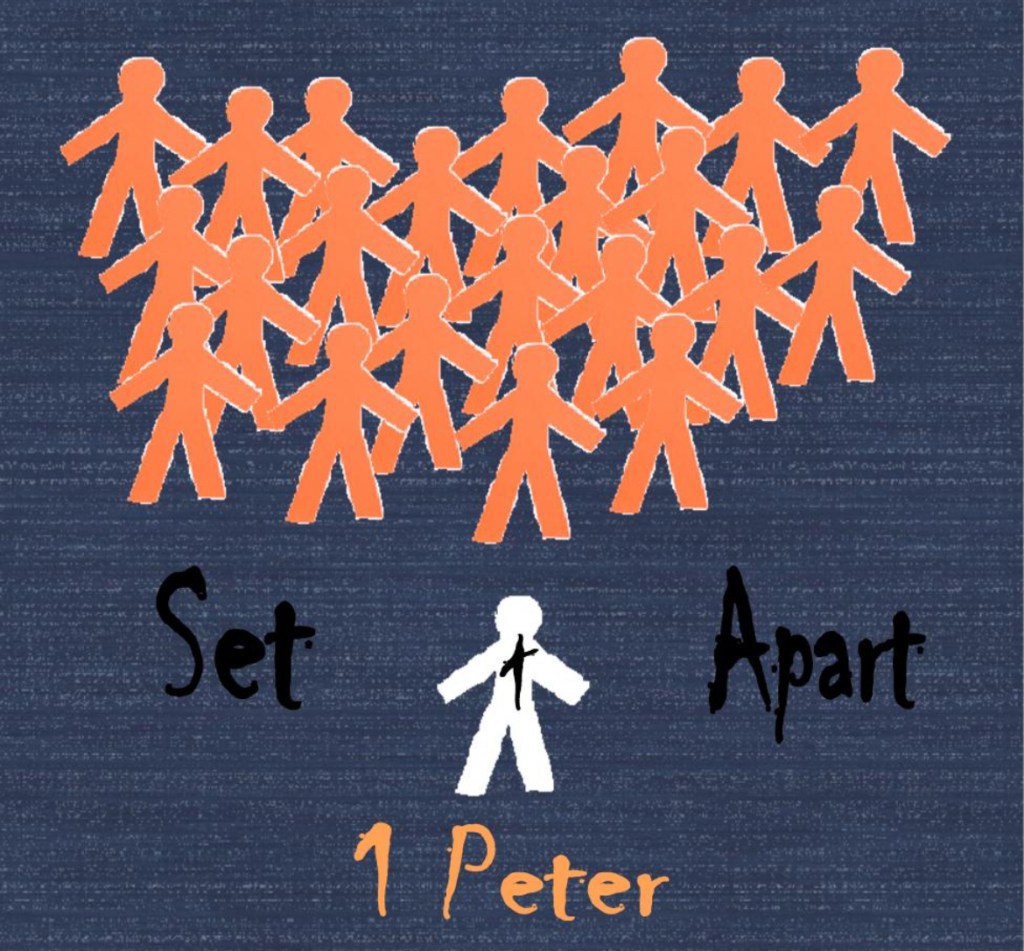
To be holy was always a vague concept to me. But to be “set apart” puts some weight behind it. And Peter admonishes us to be set apart because our Father is set apart. But what is Peter referencing and how do we live out that command in a practical way? Well, in all behavior to be honest, but specifically, Peter is quoting from a few places in the Torah where Yahuah tells us to be qadosh, or set apart …
‘‘For I am Yahuah your Elohim, and you shall set yourselves apart. And you shall be SET APART, for I am SET APART. And do not defile yourselves with any swarming creature – the one creeping on the earth. ‘For I am Yahuah who is bringing you up out of the land of Mitsrayim, to be your Elohim. And you shall be SET APART, for I am SET APART.” – Leviticus 11:44-45
and
“Speak to all the congregation of the children of Yisra’ĕl, and say to them, ‘Be SET APART, for I Yahuah your Elohim am SET APART.” – Leviticus 19:2
The first reference is where Yahuah gives us food instructions and tells us what is considered food and what is not considered food. The second reference is in the middle of expounding on a plurality of commands. He has just warned us of sexual immorality and is now reminding His people to practice commands such as fearing your father and mother, guarding the Sabbath, providing food for the poor, refraining from stealing, not lying and bearing false witness, and not oppressing your neighbor. In fact, the command to “love your neighbor as yourself” is found here:
“Do not hate your brother in your heart. Reprove your neighbor, for certain, and bear no sin because of him. Do not take vengeance or bear a grudge against the children of your people. And you shall LOVE YOUR NEIGHBOR AS YOURSELF. I am Yahuah.” – Leviticus 19:17-18
Who knew that you could find such gems of wisdom and advice in Leviticus? Who knew that learning how to “be set apart” was described in the Torah? This definitely wasn’t a book I studied much growing up. I used to read through Genesis and Exodus, get stuck in the first few chapters of Leviticus, and then skip ahead to the New Testament. I didn’t even realize these books had instructions that were relevant for me.

But let’s get back to Peter. Why is he telling us to be set apart and how do we do that in a practical way? Read the first chapter of 1 Peter. You will see that obedience is a theme that runs through these passages. We become set apart by obeying the commands set forth by the Most High.
“…chosen according to the foreknowledge of Elohim the Father, set apart by the Spirit UNTO OBEDIENCE and sprinkling of the blood of Yahusha Messiah…” – 1 Peter 1:2
When we are cleansed by the blood of Yahusha (Jesus), we should not return to lawlessness, which is sin, or disobedience. But rather we become “…obedient children, not conforming to the former lusts in ignorance.” – 1 Peter 1:14. And to do that, we need to understand what behavior is considered set apart. Most of that is found in the Torah, or the first five books of Scripture. Yahuah gives us instructions, called the Torah, which we are to live by if we want to be set apart.
Yahusha confirms this multiple times.
“If you love Me, you shall guard my commands.” – John 14:15
“Therefore, be perfect, as your Father in the heavens is perfect.” – Matthew 5:48
“Set them apart in Your truth – Your Word is truth.” – John 17:17
These are all references back to Psalm 119.
“That I might guard Your TORAH continually, forever and ever.” – Psalm 119:44
“Blessed are the perfect in the way, who walk in the TORAH of Yahuah.” – Psalm 119:1
“Your righteousness is righteousness forever, and Your TORAH is truth.” – Psalm 119:142
“…And all Your commands are truth.” – Psalm 119:151

It’s difficult to navigate this world without an understanding of the expectations from the Most High. Being “holy” is not some otherworldly vague concept. It is just following the Torah, or the commands of our Father. Yahusha did it. And He commanded us to do the same. Paul admonishes us to “become imitators of me, as I also am of Messiah.” – 1 Corinthians 11:1. And John says the same thing, “The one who says he stays in Him ought himself also to walk, even as He walked.” – 1 John 2:6.
But to understand the commands, we need to better understand the Torah, and delight in it, just as Paul did. And definitely as Yahusha our Messiah did! The Torah is not “done away with,” as some would like to say. But rather, it is an eternal instruction manual, as the Psalms describe. And it explains how we are to set ourselves apart in this world!

 FAITH IN MOTION